DropHaus: I Got Tired of Starting From Zero. So I Built the Library I Wish Existed.
There's a specific kind of frustration that only designers who work fast know. A client calls. They need a full website in 72 hours. You open Figma. And instead of designing, you spend the first 45 minutes hunting for the right hero section reference, downloading icon packs that don't match each other, googling gradient palettes, stitching together a mood board your client will barely glance at.
That's not design. That's archaeology.
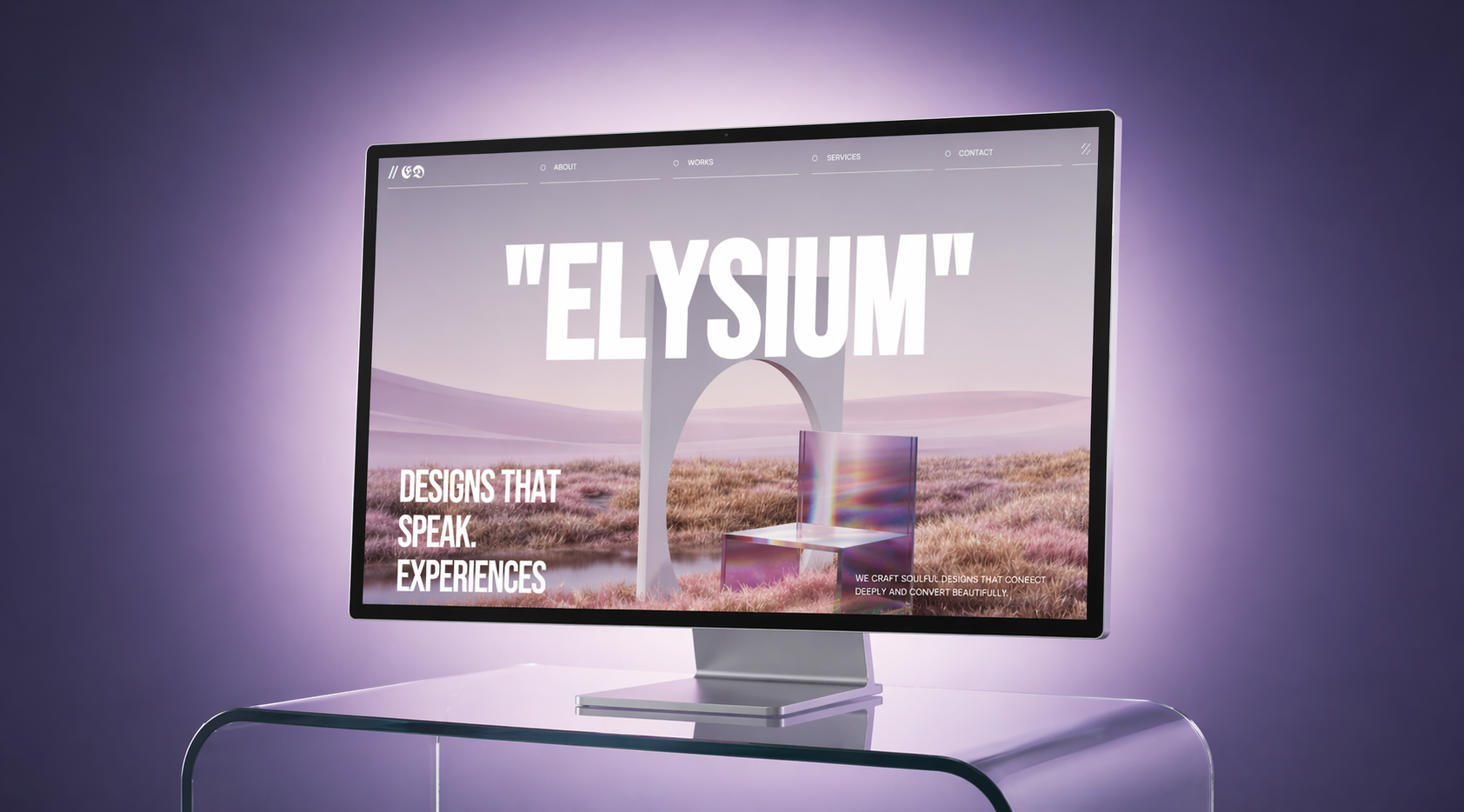
The Context: Elysium Designs.
When I started Elysium Designs, my design studio, I had one rule that was non-negotiable: every project ships premium. No cutting corners on quality, no matter how tight the timeline. Clients came to Elysium because they'd seen what good design actually does for a business. They expected it, and we delivered it.
The problem? Great work takes time. And time was always the thing we didn't have.
Clients wanted websites done in two to three days. Investors wanted pitch decks overnight. Founders building MVPs needed something presentable by Friday. The demand was real. The timelines were brutal. The standard never dropped.
DropHaus lives inside the Elysium Designs universe because it was always a design problem at its core. Everything under Elysium is about design, and DropHaus is the engine that makes Elysium possible at the speed clients actually expect.
The Problem Nobody Talks About Honestly.
I needed a way to move at speed without sacrificing quality. And nothing on the market was built for how I actually worked.
Every tool out there was either too much or too little. Beautiful but unusable. Complete but inconsistent. Fast but ugly.
Figma community files: scattered, inconsistent, impossible to trust in a production context. UI kits: expensive, half-finished, designed for one aesthetic. Icon libraries: five different packs that don't share a single design language across them. Design resources: buried behind cluttered paywalls on sites that look like they were built in 2009.
The internet is drowning in design assets. But finding the right one, at the right moment, in the right format? That's still somehow a nightmare in 2026. You end up with 14 browser tabs, three Figma files, and a mood that's somewhere between exhausted and annoyed.
So I built DropHaus.
What DropHaus Actually Is.
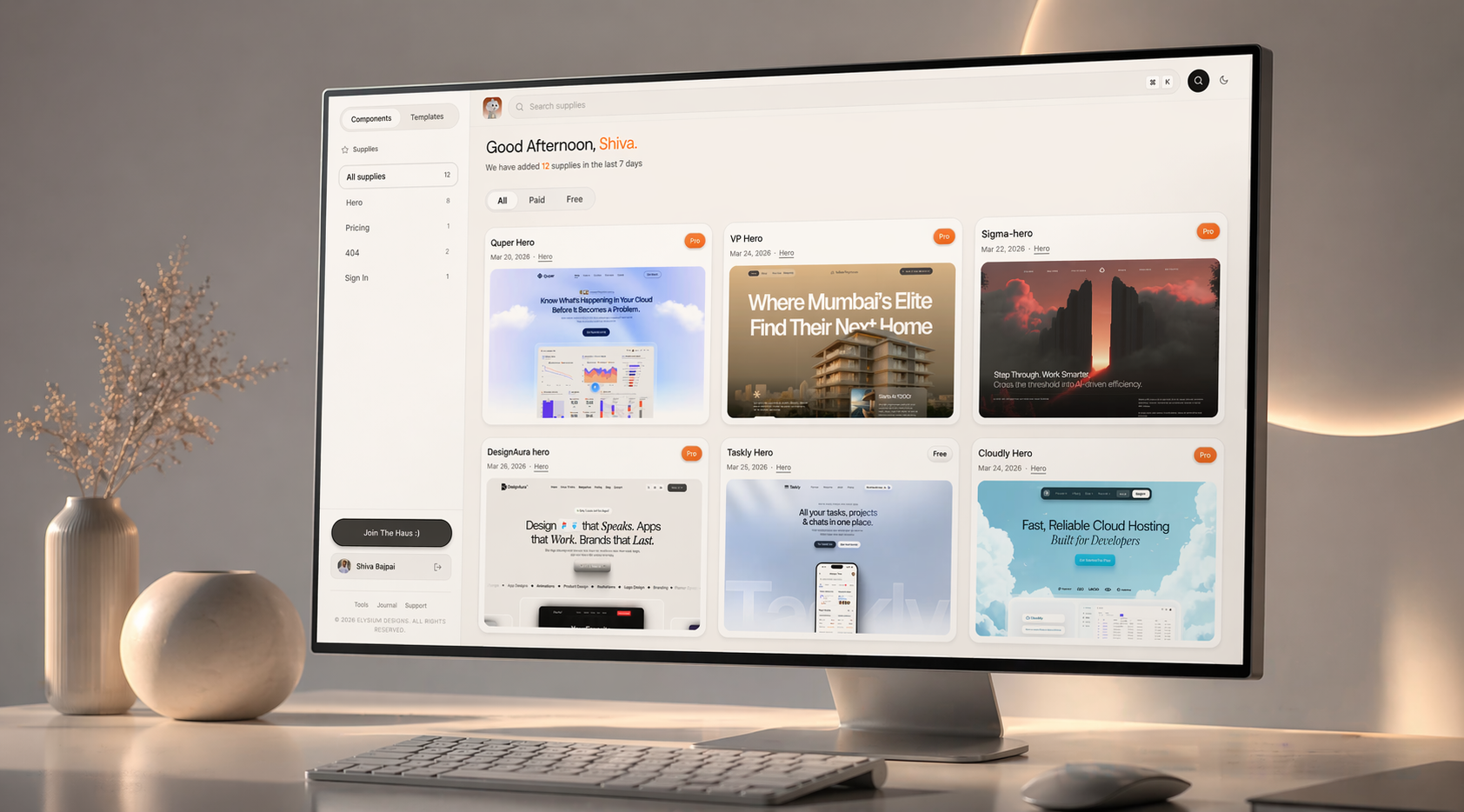
DropHaus is a design component library. Not a mood board. Not an inspiration gallery. A working library where you go in with a problem and come out with a solution, fast.
Here's what's inside:
Components.
Every section a website can hold. Hero sections, pricing tables, FAQ blocks, contact forms, footers, service grids, about sections, feature showcases. Built to be dropped straight into your project. No rebuilding the nav bar from scratch for the hundredth time. No reinventing the pricing section just because the last one was from a different project.
Templates.
Full production-ready layouts for real industries. Real estate. AI. SaaS. Marketing. Ad tech. Each one designed with the actual use case in mind, not just as something pretty for a portfolio. Templates you can actually ship.
Icons.
Over 90,000 icons. That's not a typo. Light versions, dark versions, flag icons, brand logos. All organized by category, by use case, by style. One unified design language running through all of them. You search for what you need, and you get exactly that. Not twelve slightly-wrong options from six different icon packs.
Resources.
Invoice templates. Contract documents. Proposal decks. Pitch decks. PPDs. The unglamorous stuff that designers actually need and nobody talks about building. The things that make you look like a professional studio on day one, even if you're working solo.
Gradients and Backgrounds.
Over a thousand. Mesh gradients, glass textures, noise overlays, gradient swatches that actually work in production. The kind of finishes that make a landing page look like it cost three times what it did.
Why This Changes How You Actually Work.
The old workflow: get a brief, open Figma, spend 40 minutes not designing, finally find something close, adapt it, realize it doesn't match the rest of the project, start over.
The DropHaus workflow: get a brief, open DropHaus, find what you need, ship.
That's the whole point. Not to be clever. Not to be another design tool with a beautiful landing page and a mediocre product. Just to be the one place you actually go when you need something and need it now.
When I was building Elysium, I kept a running mental list of things I wish existed. DropHaus is that list made real, one category at a time.
Every section in DropHaus came from a real moment in a real project where I needed something and couldn't find it fast enough. The icon library exists because I was once 30 minutes deep in a Google search for a specific "document upload" icon that matched the rest of the UI. The resources section exists because I sent a client an invoice template I hacked together in Notion at midnight and it embarrassed me. The gradients exist because I was matching mesh backgrounds by eye across three separate tools.
Every gap in DropHaus is a scar from a real project.
The Philosophy Behind It.
Good design should be fast to access and impossible to compromise on. Those two things are usually in tension. DropHaus is an attempt to close that gap permanently.
You shouldn't have to choose between moving fast and looking premium. With the right foundation already built, you can do both. That's what every component, every template, every icon in DropHaus is optimized for.
- Start instantly. No setup, no learning curve.
- Find what you need in seconds, not tabs.
- Ship something you're proud of, every time.
- Never build the same thing from scratch twice.
What's Next for DropHaus.
The library keeps growing. More component categories, more industry templates (health tech, edtech, crypto, fintech), more icon styles, deeper Figma integration. The goal is simple: every time you sit down to design something, DropHaus has what you need before you even know you need it.
Because good is not enough. That's the standard at Elysium. And DropHaus is how we hold it.
DropHaus was built because I was tired of losing hours to the wrong kind of work. It's the library I needed before every Elysium project. Now it's available to every designer who's ever burned 40 minutes searching for the right gradient.
→ Explore DropHaus, it's built for designers who move fast and refuse to compromise.